
Two Inseparable Truths
Plus an evolutionary perspective and miracles

Two Inseparable Truths
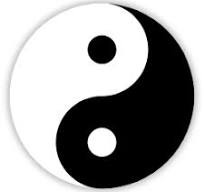
In one response to the question What IS This?, Buddhism speaks of the Two Truths, the relative (or conventional) truth and the absolute truth. From my perspective (and that of Buddhism), it’s very important not to lose touch with either one. They are both here simultaneously. They arise together. Fixating on either side to the exclusion of the other is delusion.
The relative is the apparent world of discrete forms and the relationships between them. It is the world of cause and effect, birth and death, here and there, this and that, you and me, time and space. It is the capacity to distinguish healthy from unhealthy, good from bad, kindness from cruelty, love from hate, apples from oranges, and you from me. It is our much needed sense of healthy boundaries and limits. It is the functionally necessary sense of being located in a particular time and place. It is our unique individuality and our concerns for healing what is broken, discerning injustices, and acting in wholesome ways.
The absolute is the emptiness of all forms, the fact that no-thing ever actually persists, and therefore, never actually exists as some-thing that can be carved out of the whole. No-thing can be separated out from everything it supposedly is not, and all apparently solid forms are actually unresolvable, thorough-going flux. This is the recognition that reality (otherwise known as Here-Now) is a limitless, boundless, seamless wholeness or unicity, one without a second, no-thing-ness appearing as everything. In the absolute, there is no birth and death, no inside and outside, and no separate thing to cause or effect any other apparently separate thing. There is no self separate from the totality to be in or out of control, or to have or not have free will. It is impossible to pin down where any apparent person or thing begins or ends, and there is no such thing as beginning or ending.
Both of these perspectives, the relative and the absolute, are present and discoverable in this very moment, right now. They show up together!
Most humans are living completely from the relative or conventional perspective, or more accurately, they think they are! Explorations in nondual spirituality and practices such as meditation are one way to deconstruct and see through that perspective, not just philosophically, but through direct experience and observation, and also to discover (or notice, or realize) the absolute truth, not as a mere idea, but as this direct immediate experienceable reality right here and now. This deconstruction and realization is very liberating and wonderful.
But then, spiritual people often get stuck for a while, and sometimes forever, in the absolute perspective. They seem to see and acknowledge only the absolute truth. They deny that relative reality has any reality at all—which, from what I regard as a misunderstanding of the absolute perspective, it doesn’t. Buddhism identifies being stuck in the absolute as perhaps the greatest form of delusion. I would say that the absolute includes the relative—they are not one, not two. Non-duality includes duality. Otherwise, it would be dualistic. As Zen Master Dogen put it, true realization is “leaping clear of the many and the one,” not fixating anywhere.
The relative view might be regarded as a map produced by the brain and nervous system and by conceptual thought, a map that is very much needed for everyday functioning. The relative view seems to divide, abstract, label, organize and reify the otherwise ungraspable aliveness and thoroughgoing flux of present experiencing, allowing us to navigate our everyday lives. As they say, the map is not the territory. But mapping is something the territory is doing, and as an aspect of this living reality, and as a map, the map is every bit as real as the territory it describes, and every bit as ungraspable. And any way we formulate or conceptualize the absolute (seamless, boundless, undivided, whole, and so on) is itself another map, as is the very notion of relative and absolute.
From the absolute perspective, there is nothing to practice, nowhere to go, and no one apart from everything else to do any kind of practice. There is only NOW, just as it is, never the same way for even an instant, always just this. Time and space are appearances with no actual reality, as are apparently separate people. The only real eternity is the eternal NOW; the only actual infinity is the immediacy HERE, this placeless presence from which we never depart.
But the absolute shows up as the relative, and from the relative perspective, there is indeed a journey over time, documented by photographs and videos, and there is undeniably a person here, a conscious and evolving bodymind organism, a unique human being who is making that journey through time and space, someone who was born and will one day die. That person might be compared to a whirlpool in a river or a wave in the ocean. It is ever-changing and never separate from the river or ocean, but it nevertheless has a kind of recognizable form or patterning of energy, integrating and eventually disintegrating. Along the way, that person (that patterning of energy) changes and evolves, acquires knowledge, learns from experience. There are things to do, and changes that can be made in the world at large. Injuries can be healed, things can be repaired, mistakes can be identified, corrected and forgiven, plans can be made and carried out. There are apparent choices and decisions, and we don’t confuse apples with oranges.
BOTH of these perspectives are real. To deny either one is to miss half the truth.
In Buddhism, they have these precepts, and it is sometimes said that from the relative perspective, it is impossible not to break the precepts. For example, the first one, not killing, is broken every time we wipe our forehead or take a step, each time killing countless microorganisms. But from the absolute perspective, it is impossible to ever break the precepts because there is nothing apart from everything else to kill or be killed. The relative view is crucial for everyday life. But realizing the absolute view gives us a deep peace, freeing us from guilt and blame, knowing that nothing is ever really destroyed in the way it seems to be, and that everything is an impersonal and uncontrollable activity of the whole universe with no fixed form, dissolving instant by instant.
I find life to be more complex, nuanced and mysterious than the absolute perspective alone can fully contain. Because after all, relative reality is undeniably and miraculously showing up, right here, as seemingly real as real can be! And if we use the realization of absolute no-thing-ness to dissociate, to sugarcoat or deny the pain, grief and horror in life, to deny our humanity, or to avoid taking responsibility for our actions in slippery ways, then in my opinion, we have missed the mark. To take one mundane example, if your partner mentions that you’re not doing your share of the housework, and you respond by saying there’s no self and no house and no choice and nothing could be other than how it is, this is a kind of slippery cop-out. You’re mixing up different dimensions of reality. What you’re saying may be absolutely true, but the truth of it is not in the ideology, and the ideology is being used in that case as a justification or excuse for not taking responsibility in appropriate ways by claiming a false kind of helplessness or lack of response-ability (ability to respond).
The great Buddhist sage Nagarjuna deconstructed all views of reality. He said: “Emptiness is the relinquishing of all views,” and he added, “Those who hold to emptiness as a view are called incurable."
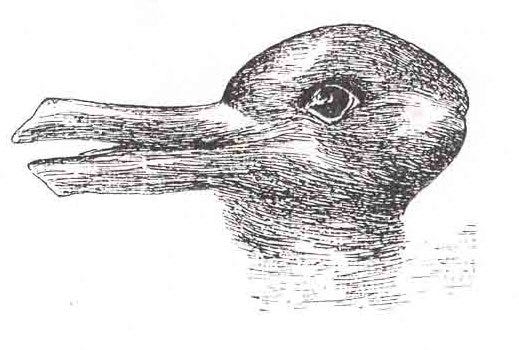
Oneness and multiplicity, stillness and movement, killing and non-killing, self and non-self, choice and cloicelessness, relative and absolute are all evident right here, right now. You can’t deny either side of the coin. And none of these formulations can capture reality. Reality is ungraspable and unpindownable. And yet, we don’t confuse apples and oranges. Not one, not two:
An Evolutionary Perspective
I’ve long found Darwin’s theory of evolution quite compelling, and in recent decades, a number of people have applied an evolutionary perspective to spirituality. Ken Wilber is one of them, and my friend Tim Freke is another. I’ve found myself resonating with this perspective more and more.
As I’m seeing it these days, the universe is evolving, partly through each of us. Human society is evolving. Consciousness is evolving. We are each evolving. No two humans are in exactly the same place in that unfolding process, and for each of us, that process involves many tiny steps forward and often back again, as well as sometimes big leaps and major backslides. Being human is always a mix of clear days and cloudy ones. Sometimes we are driven entirely by habit and conditioning, much of it unconscious, and at other times there is an open aware presence that seems free from all of this, allowing new possibilities to reveal themselves and come into being.
Some days when I feel anger rising up in me, or when I start to bite my fingers, the ability is here to stop. Sometimes the desire to explode in anger or bite my fingers simply evaporates in open aware presence. At other times, I’m off balance, more tangled up in the mind, aware presence seems more obscured, and those urges to explode or bite overwhelm this organism. There may be a desire to stop, to not do that, but the old, habitual part of me that wants to explode or bite is stronger in that moment than the newer, more evolved part that wants to not do that. And so, in that moment, I uncontrollably speak in anger or compulsively bite my fingers, unable to stop myself.
Some days this bodymind system is more evolved than on other days. Based on my experience, I have a strong sense that centerless, boundless, all-inclusive, open aware presence or unconditional love is the leading edge of evolution, but it’s not always fully online yet. I sense that aware presence is unconditioned, free of the past—a space from which the new and unexpected can emerge. I can’t prove that, and I might be wrong, so I don’t hold it as a belief. But I experience the shift from caught-up-ness in the story of separation and encapsulation and the freedom and spaciousness that arises when that is absent.
Sometimes this evolutionary process is messy and frustrating, and often it’s really hard, like being squeezed down the birth canal into a new unknown. Longing is perhaps a kind of evolutionary pull, as I wrote about in my last post, “The Heart’s Inmost Request,”pulling us toward an unimaginable future, not unlike those first sea-dwelling creatures long ago that were somehow moved to wriggle out of the sea onto the land. Everything is always becoming something new, instant by instant, always now. And we don’t really know how it all works or what is or isn’t possible.
And yes, ALL of what I just described—the pull of longing, an evolutionary process of becoming, conditioning and freedom from conditioning—ALL of this is in the realm of relative reality. In the absolute sense, all of this is non-sense. It doesn’t exist. All of waking life is like a passing dream or a movie, made out of nothing substantial, vanishing into thin air.
And yet…
The Greatest Miracle
Finally, I’ll leave you with another beautiful talk by one of my top favorite Zen teachers, Jiryu Rutschman-Byler, the current abbot of Green Gulch Zen Farm, on “The Great Miracle”:
Love to all…
Joan, you said that you believe awareness is unconditioned. This is so simple and I also feel, sense and believe this to be so. The one great teacher. Directly through to here, with the sacred messenger, one’s conscience.
I had to laugh a little when I read this post, as I have been listening and often struggling to grasp the nuances of the 11-hour audio book "Lights On" by Annaka Harris, which if you aren't familiar, is a deep dive into the origins of Consciousness. She is essentially exploring whether consciousness is an emergent property of complexity or rather a fundamental property in the universe. (To her great credit, she doesn't pretend to arrive at a definitive answer.) I laughed because your articulation of the two inseparable truths very closely mirrors (I think?) what she arrives at after speaking to a wide range of experts from meditation teachers to physicists to neurobiologists. Maybe it was BECAUSE I have been listening to the audio book that I found your post so exquisitely and clearly described. But maybe also you just have such an incredible way of articulating the ineffable. At any rate, something clicked in my brain, so thank you. I am a big fan ever since reading "Death: The End of Self Improvement". I also would like to formally rate the title of that book one of the best ever conceived.