
Way-Seeking Mind
the pull of what you really love

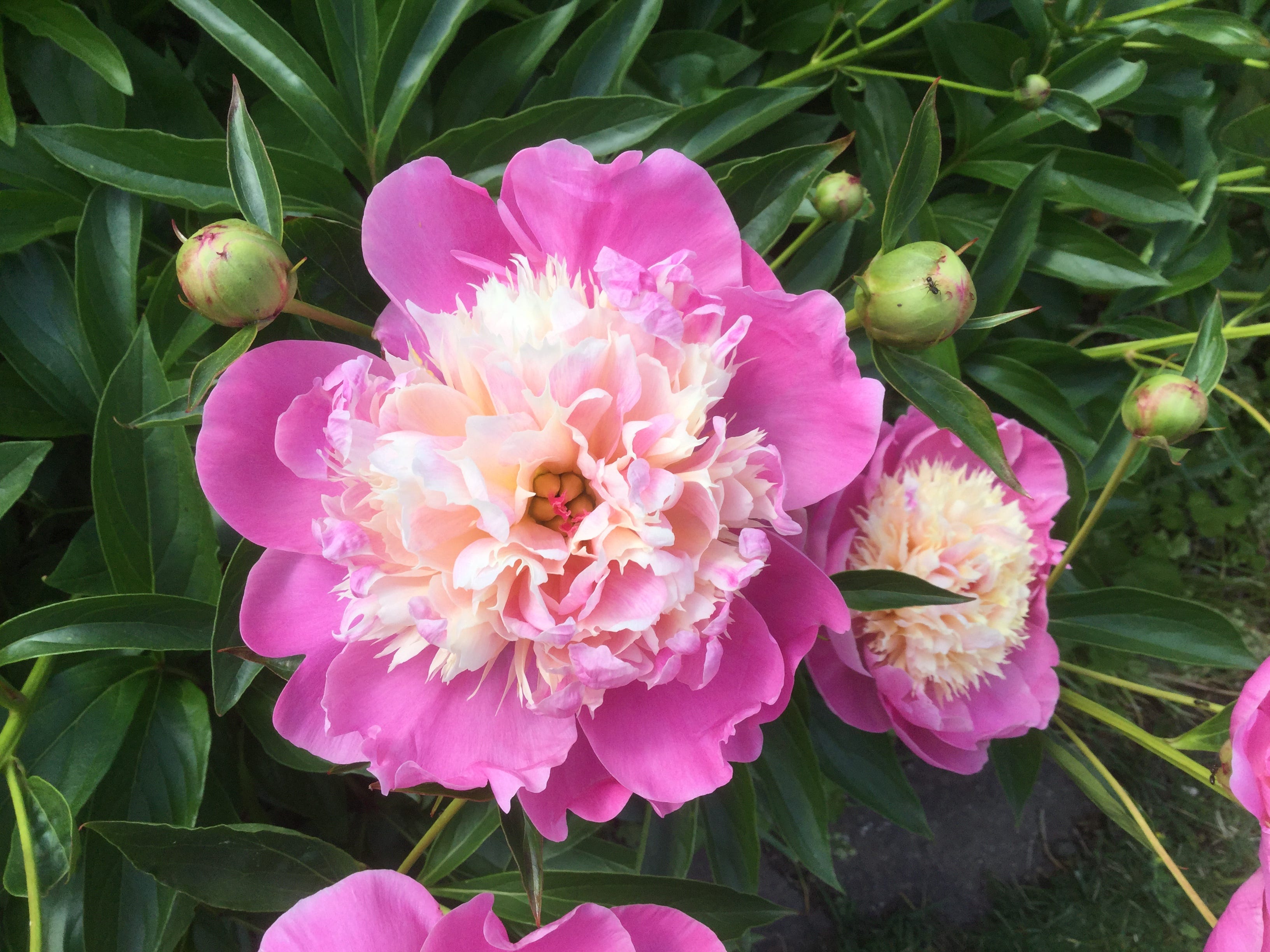
Let yourself be silently drawn by the stronger pull of what you really love.
– Rumi
There is a longing in the human heart for something we can neither grasp nor deny, a longing to open, to blossom, to be at peace, to no longer feel separate, to find a way beyond the mind-generated suffering that we sense is unnecessary — a way to turn toward what we sense is best in us — to simply be the unadorned presence that we most fundamentally are. This is a gravitational pull toward love and wholeness and recognizing the sacredness that is everywhere.
Even as a child, I felt this pull, this sense that life was sacred. I sensed this in nature and soon found it embodied and expressed in religion.
I was raised by an atheist father and an agnostic mother who was deeply spiritual but not into organized religion. My father was a determinist who told me that free will was an illusion and that one day the sun will explode, while my mother was an optimist who told me that you could do anything if you put your mind to it. She said simply that “God is love.” All the aunts and uncles were atheists. We never went to church. But from a young age, I was deeply attracted to religion.
I devoured books on world religions. I felt especially drawn to Buddhism, but never imagined back then in the 1950s that I’d ever meet any actual Buddhists or would one day live at a Zen Center. Jesus appealed to me as well—the fact that he was a working man who hung out with fishermen, emphasized caring for the poor and the marginalized, overturned tables and spoke radical truths such as loving your enemies and turning the other cheek. I loved the beatitudes and the whole Sermon on the Mount. I invented religions in my bedroom during my daily quiet time. I loved being in empty cathedrals and churches. I felt something there, a stillness, a vastness, something profound.
As a teenager, I joined a Christian church. It was a progressive church. When I asked the minister what God is, he said something like energy, something formless, invisible and ungraspable but ever-present and powerful. We might think of electrical energy, which enlivens a multitude of different appliances that serve many diverse functions. The appliances all have a limited lifespan, but the electrical energy that brings them to life is ever-present. It isn’t created by the appliances, and it doesn’t die with them. The electricity that runs the refrigerator is the same electricity that runs the toaster oven or the lamp. And unlike all the momentary forms it animates, electrical energy is boundless and ever-present – it is everywhere – and yet it can never be seen or taken hold of as an object. We know it only by what it does.
Have a look at nature and see the way it’s patterning and shaping and forming. Galaxies are forming, the earth and planets are moving round, seasons are coming and going, the tides moving in and out… the whole of nature is suffused with an innate intelligence, and you’re nothing but a pattern of energy. That intelligence is what is breathing you, growing your hair and your fingernails, replacing cells in your body, digesting your food—it’s all happening quite naturally and effortlessly.
— Sailor Bob Adamson
Years later, after I had sobered up from near-fatal drinking and then left behind the world of political activism that followed, when I walked for the first time into a zendo (a space for Zen meditation), it felt like home—the simplicity, the empty space, the elegant spare beauty, the way it was cared for. And when I began meditating there, sitting in silence, a whole world opened up.
And later, the sitting room at Springwater, open, bare, huge windows overlooking the fields and rolling hills, green plants overflowing from the balcony, the beautiful hardwood floor, the empty space, the light. Toni Packer had dispensed with all the Buddhist imagery, all the rituals. And that was beautiful. The stillness in that room was palpable. Days and nights spent in silence there, working with others, walking in the woods and fields – all of that continued to open me.
And what exactly was this “me”? An exploration of that question through open attention was invited. There seemed to be two vastly different experiences to which the word “me” pointed. One was the character in the story, the self-image, the person I seemed to be, the bodymind, the image seen in the mirror, the personality, the behaviors, and the apparent thinker of my thoughts, which turned out itself to be only another thought.
The other “me” was what was found by looking deeply inside for what was most fundamentally being referred to by that word. That investigation revealed open space, emptiness, unbound awareness, presence, nothing that could be seen or grasped or objectified, and at the same time, absolutely everything—the whole universe.
I cannot explain why I was drawn to religion as a child, or why I was drawn to Zen or Toni Packer or Advaita or any of my other teachers that followed or to this kind of experiential exploration of life. In Zen, they call this spiritual or religious impulse “Way-Seeking Mind.” It is the pull of something deep within us.
In my second book, Awake in the Heartland: The Ecstasy of What Is, I compared this kind of magnetic pull to what happened to a group of people in the movie Close Encounters of the Third Kind. These people in the movie were all being called by extraterrestrial beings, but the people didn’t know that. They all felt mysteriously attracted to this shape, not knowing what it was or why they kept feeling drawn to it. One of them kept compulsively making the shape with the mashed potatoes on his dinner plate, not knowing why he was compelled to do this. His family thought he had lost his mind. It turned out the shape they all felt mysteriously drawn to was a mountain in Wyoming where the extraterrestrial spaceship would land.
As I wrote in Awake in the Heartland, “We see a dim shape, we feel it, we’re not sure what it is. We’re being drawn by something we cannot know. I’m being drawn by something I cannot explain or even understand.”
I cannot explain why I continue to be drawn to silence, to stillness, to sitting quietly, to giving open attention to the what’s here now, both the visual, auditory, tactile, somatic sensory-energetic play and the listening awaring presence beholding (being and holding) it all. And these are not two separate things, the sensations and the awareness beholding them. They are one indivisible whole like the ocean waving.
If we stop thinking and feel into this presence, this aliveness that we are, what we come upon can get subtler and subtler. We may discover a stillness, a silence, something intangible but palpable and brimming with energy, something at once most intimate and closer than close and yet at the same time boundless and unlimited, a presence that feels spacious, open, vast, uncontained and immensely alive, something all-pervasive that is shining forth everywhere in everything.
The mind wants to grasp this, name it, pin it down, figure it out, understand it, possess and control it. But there’s no “it” there in reality. This no-thing-ness is ungraspable and unpindownable. It’s not nothing. But it’s not something either. It’s not an object or a particular experience, a this as opposed to a that. It’s all-inclusive. We can’t stand outside of it. It has been described as a sphere the center of which is everywhere and the circumference nowhere, or the zero on which all other numbers depend. But these are just suggestive pointers to an it-less-ness that cannot really be pointed out because nowhere you point is it and simultaneously there is nowhere you can point that is not it.
Calling it God gives it a warm, loving, personal feel. Calling it presence or awareness or intelligence-energy is more neutral. Calling it “a dried shit-stick,” as one irreverent old Zen Master did, defeats any attempt to make it something other than, or holier than this cup of tea, this piece of toilet paper, this in-breath, this out-breath. Just this. But ultimately, it is unnameable. Brother David Steindl-Rast, a Benedictine Catholic monk, often refers to God simply as “the Mystery.”
It’s a mystery in that it cannot be grasped, but at the same time, here it is, shining forth everywhere, as plain as day.
The apparently formed world is a marvelous expression of the formless, a waving of the great formless ocean. Go deep into any form (a sound, something seen, a tactile or somatic sensation, a taste, a fragrance) and you find infinity, no-thing-ness, the whole universe—just as if you go deep into any wave, you find the entire ocean and nothing solid. Each wave includes the entire ocean and is a movement of the whole ocean.
What is God? The eternal One Life underneath all the forms of life. What is love? To feel the presence of that One Life deep within yourself and within all creatures. To be it. Therefore, all love is the love of God.
— Eckhart Tolle
Awakening is about opening to this love, this presence that we all most fundamentally are — abiding in it, dissolving in it, being it, recognizing it everywhere in everything.
Thomas Merton, in his little book Day of a Stranger, writes of his life as a monk: “Perhaps I have an obligation to preserve the stillness, the silence, the poverty, the virginal point of pure nothingness which is at the center of all other loves.”
Brother David Steindl-Rast describes the vocation of a monk as “being entirely present in the given moment… being alive in the Now.”
Now is the only actual eternity. It is timeless, ever-present. What I call this one bottomless moment is not a fleeting moment in time, but the ever-present Now. This Now, this presence, is what we most fundamentally are, prior to all the ways our unique conditioning filters our experience. I have a deep sense that we all share the same “I,” the same fundamental ground of being. That ground is unborn and undying. Whether we conceptualize it as pure consciousness or as the thorough-going impermanence and interdependence of the natural world, either way, it is “One Life,” as Eckhart Tolle put it, an ever-present unicity appearing in infinitely varied ways.
Please understand that there is only one thing to be understood, and that is that you are the formless, timeless unborn.
— Nisargadatta
That must be discovered, beyond belief. We won’t find it by thinking and reasoning, although those may be helpful to some degree along the way. But thought always operates in subject/object duality, in the conceptual map-world once removed from life itself. In the thought realm, we will always have confusion, conflict, uncertainty, and seemingly unresolvable paradoxes. Confusion and complication are always in the mind (in thinking). So if we’re feeling confused and desperate, it’s a kind of dharma bell inviting us to stop and be quiet.
If something seems complicated, beware. Truth is very, very simple.
– John Butler
We find what we’re seeking by simply being here now, being present, being the presence that we are and that is everything. In this presence, questions melt away. When there is simply open aware presence, there is no problem, no body, no mind, no me trying to figure all this out. We eventually notice that this aware presence has never actually been absent. It is ever-present.
But in open aware presence, there is nothing to grasp, and to the thinking mind, this is unsettling. Thought wants to pin things down, put them into neat little boxes, understand and control them. It finds vast emptiness and nothing to grasp unsettling. There is no “me” in this and nothing to hold onto. So we run back to the more familiar thought realm and keep looking for enlightenment in all the wrong places: out there, in others, in the future. We try again and again to think our way to clarity, and we get entangled in more and more complication and confusion. Eventually, if we’re lucky, we hear that little dharma bell in our mind (ding, ding, ding) inviting us to stop. Stop. Be still. Just be.
Brother David writes, “In the end, the Mystery is the Unknowable. And if something is unknowable, then it cannot be put into words. We may experience it by letting it take hold of us, but we cannot ourselves take hold of it.” (italics mine)
Or as Billy Doyle puts it, “Don’t look for silence; silence is looking for you.”
Awakening is letting the thinking-grasping mind relax and open, surrendering to the unknowable, holding on to nothing at all, allowing ourselves to be taken. Many have suggested that awakening happens below the level of conscious awareness, in the germinal darkness that is subtler than anything perceivable or conceivable. The little “me” (the thinking mind) is never in control of it.
Back when I was still desperately chasing some final enlightenment that I believed “I” hadn’t had, it occurred to me to wonder what I thought enlightenment would give me. The answer was that I’d finally be able to relax and just be. Pretty funny!
Then I realized the whole quest for enlightenment was all about “me” as the character in the story, seeking some future transformation. And the great irony is that we already are what we are seeking. No wave is ever anything other than the ocean. Boundlessness, wholeness, unicity, awareness, presence — this is always already fully present here and now. It cannot be attained because it cannot ever truly be lost. It is what we are, what everything is. It is all there is.
What disappears more and more in the awakening journey is both the caught-up-ness in the mental clutter that seems to obscure this and the identification as a separate, encapsulated bodymind. In some cases, this disappearance seems to happen overnight in one spectacular moment, but more commonly, it happens gradually, often imperceptibly, over time.
With some realization comes imperceptibly, but somehow they need convincing. They have changed, but they do not notice it. Such non-spectacular cases are often the most reliable.
— Nisargadatta
It really is very ordinary, very simple.
To be truly awakened is actually very ordinary. It just means that you are here as the trees are here. You’re here as the flowers are here. That’s all it is. You’re here, rather than lost in a world of not here. As you relax and deepen into the present moment, no matter how ordinary it appears to be, then slowly and gently the deeper levels of Presence will open up…
God cannot be known with the mind. God cannot be understood or defined. The best that the mind can do is believe in God. But to believe in God is a very poor substitute for knowing God through your own direct experience. And once you know, there is no need for belief.For me, God is the silent Presence at the very heart of all things present… If you want to experience the living Presence of God in all things present, you will have to come to where God is. You will have to come out of the mind and become present. When we become fully present, we will begin to sense the Presence that is in everything. This Presence is what I mean by God.
— Leonard Jacobson
And this is Wayne Liquorman, in the Advaita Fellowship October Newsletter:
Hello my loves,
Don’t forget to breathe.
What could be more simple
Or more clear?
When morning finds you,
Before succumbing to the glowing screen that injects
Its daily dose of misery and degradation
Pause if you can
Breathe.
Just that.
Simply
Breathe.
Perhaps you’ll hear the birds.
Perhaps you will feel the insistent beating of your heart.
Perhaps you’ll notice
how vast the world truly is
How it stretches far beyond
the feed’s narrow tunnel of fear.
There is Love here
In this eternal Moment
There is magic.
Beauty.
Hope.
Endless possibility.
Today’s doom
is merely tomorrow’s discarded thought.
And after you’ve watched your breath,
After you’ve listened to the small song
of the unseen bird,
you will still have plenty of time
To meet the day’s demands.
But now,
You’ll bring a broader reality with you.
For context is everything.
And if you live only
in the story sold to you
by the profit machine,
you will be endlessly poor.
So, begin again.
Breathe.
Remember
You are eternally Free.
With much love,
Wayne— Wayne Liquorman
Religious faith or spiritual life is ultimately very simple. Just breathe. Just be here, as you are. Just take the next step. Just be this aliveness that you cannot not be. Stop. Look. Listen. Open the heart-mind. Relax. And if you’re not feeling relaxed, if you’re feeling tense, then simply be tense! It’s only another passing wave. Enjoy!
The spiritual path (the pathless path through the gateless gate) is ultimately a movement of gratitude and celebration, a dance between pure potentiality and embodied manifestation, between the transcendent and the ordinary, the personal and the transpersonal, our limited humanity and the unlimited unencapsulated unbound vastness of aware presence, the wave and the ocean, the absolute perfection of everything as it is and the messiness and difficulty of human life, the manifestation and the germinal emptiness. And in my experience, spirituality that ignores either polarity is incomplete. They aren’t really separate. Unicity shows up as multiplicity. We are both the ocean and a unique, never-to-be-repeated waving of that seamless ocean. This is the mystery of not one, not two. Lover and beloved, dissolving together in love.
Just as I can’t explain my love for what I sometimes call God, I also can’t explain why I love the often anti-spiritual expression of my friend Robert Saltzman, or the life and writing of Charles Bukowski, or the songs of Leonard Cohen, or Jack Haubner’s book Single White Monk: Tales of Death, Failure, and Bad Sex. Perhaps my love for all of them (and for others who touch me in a similar way) has to do with a different pull that I share with these people, a pull toward truth and honesty and a willingness to face the darkness, messiness and uncertainty in life without any hopeful, comforting veneer or magical thinking. There is a real freedom in that kind of nakedness, and I feel quite certain that my near-fatal life as a disruptive, unruly and sometimes abusive drunk many decades ago was every bit as sacred and holy, and every bit as much a devotional celebration, as my sober life now. It all goes together. And this is it, right here, right now. Undivided. Infinitely varied. Just this. Just as it is.
Feel the unstoppable, pouring forth of life that is each instant, each experience, each momentary perception. In every moment, reality assumes a different shape and form, a different flavor, a different texture, a different quality. But all of it is reality, all of it life’s emanation, life’s effulgence.
– John Astin
Love to all…
Beautifully said, Joan. Very you. <3
I wouldn’t call my view anti-spiritual so much as post-spiritual—no religion, no God, no destination. What appears is already complete, needing no transcendence or backdrop. Nothing denied, nothing beyond—just this, as it is.
Just beautiful, Joan. The peony and the first quote…wow.
Orange and red leaves dancing off the trees, lots of wind and rain here in Vancouver. I’ve started fussing at my thumb cuticle so I think of you often….
You and Robert make such a difference in my life.